In the fast-paced world we live in, it’s easy to overlook the vital roles that our gut and nervous system play in our overall well-being. Recent advancements in neuroscience and Ayurvedic nutrition bring exciting insights into how these systems are intricately connected. If you’re a working professional aged between 30 and 55, understanding this connection is crucial for maintaining optimum health and enhancing your quality of life.
The gut, often referred to as the “second brain,” is home to the enteric nervous system, which communicates with the brain. This communication occurs through the vagus nerve and neurotransmitters, linking our central nervous system with our digestive tract. The balance and health of your gut can profoundly impact not only digestion but also your mood and stress levels.
Ayurvedic nutrition emphasizes the importance of balancing the doshas—Vata, Pitta, and Kapha—which correlates with managing stress and energy levels effectively. By paying attention to dietary and lifestyle choices that support gut health, you can significantly influence your nervous system’s functionality and overall stress management.
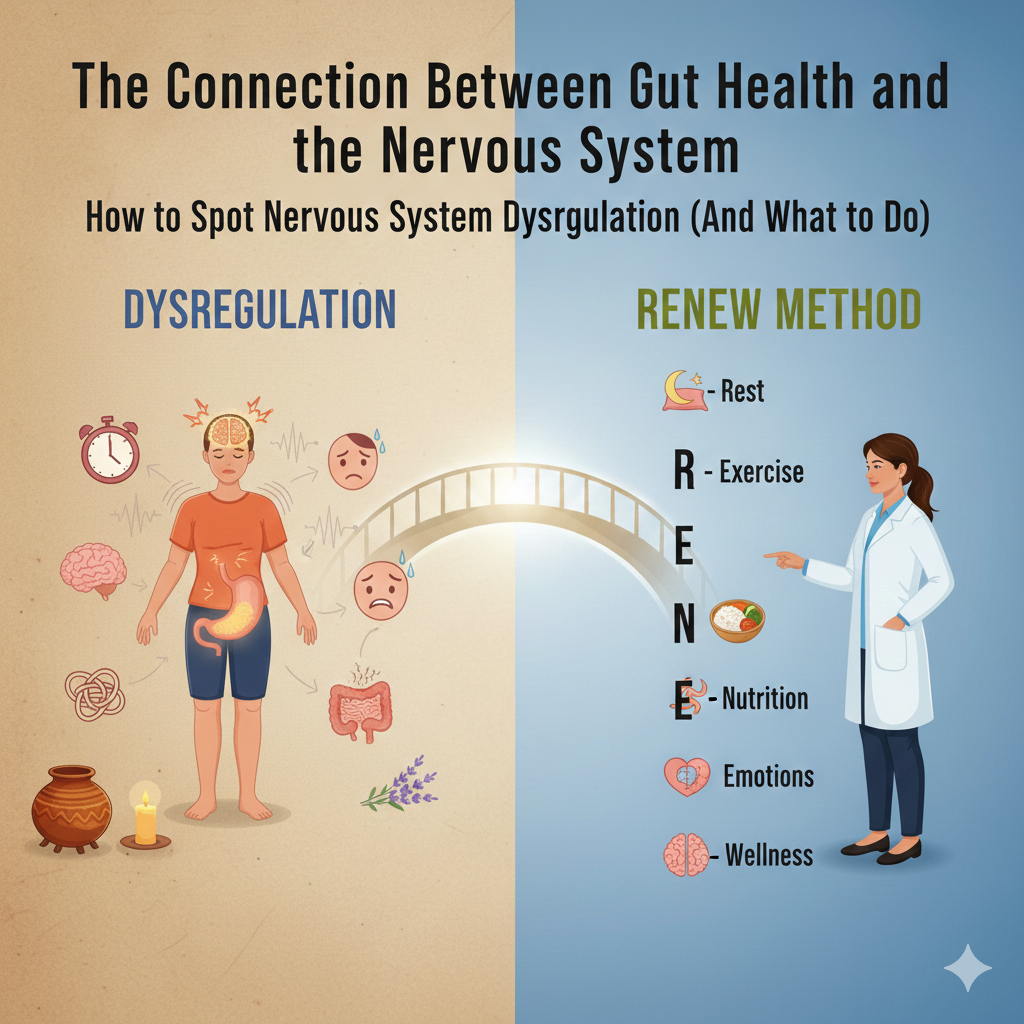
One powerful tool in bridging gut health and the nervous system is the RENEW method, which stands for Rest, Exercise, Nutrition, Emotions, and Wellness. By integrating these elements into your daily routine, you provide a foundation for balance and sustainability in your health journey.
Rest: Quality sleep is paramount in repairing and rejuvenating the body. It is during sleep that the brain processes gut-induced neurotransmitters. Ensure you maintain a consistent sleep schedule, creating an environment conducive to rest, which in turn supports gut-brain communication.
Exercise: Regular physical activity helps regulate bodily functions, including digestion. Exercise stimulates the production of endorphins, reducing stress and supporting digestive efficiencies. Simple routines like a morning walk or yoga can do wonders in harmonizing the body’s systems.
Nutrition: It’s no secret that what you eat plays a critical role in both gut health and the nervous system. Ayurveda suggests a personalized approach to nutrition. Increase your intake of fresh fruits, vegetables, whole grains, and fermented foods, which promote a healthy gut microbiome. Herbs like ginger and turmeric can also be beneficial, providing anti-inflammatory properties.
Emotions: Managing stress and emotional health is just as vital. Stress can have a direct effect on your gut, leading to symptoms like bloating or discomfort. Practices such as meditation and mindfulness can help maintain emotional equilibrium, thus improving gut and nerve function.
Wellness: Lastly, overall wellness incorporates mental, physical, and emotional health. Regular check-ups and self-care practices, like reading or engaging in hobbies, nurture the interconnected systems of the body. Keeping a journal may also be helpful in tracking changes and responses to different activities or foods.
Adopting the RENEW method provides a comprehensive approach to bolstering both your gut health and nervous system. As neuroscience reveals more about the gut-brain axis, integrating Ayurvedic principles offers a holistic path to improved health. By fostering the connection between these crucial systems, you set a foundation for resilience in both work and personal life.
If you’re striving to improve your well-being or manage stress effectively, understanding and implementing these insights can be transformative. A balanced gut leads to a balanced mind, and by working towards harmony between these systems, you can experience a renewed vitality and zest for life.