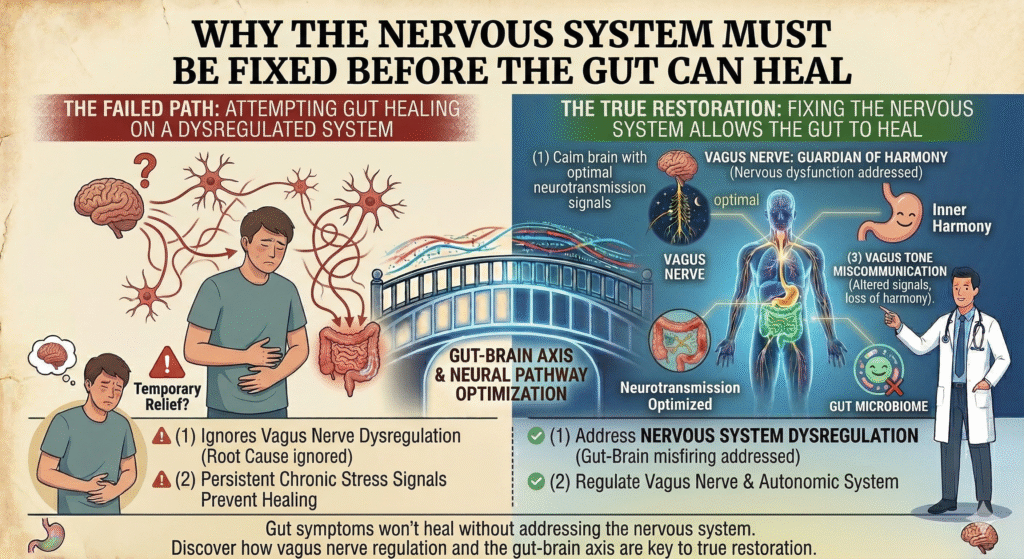
The prevailing myth that gut health can be restored independently without addressing nervous system dysregulation is flawed. For decades, patients have been led to believe that dietary changes alone can heal their gut issues. They can’t. When the nervous system particularly the vagus nerve is disregarded, true healing is impossible. This is the crux of gut and nervous system interplay.
The Vagus Nerve: The Command Center of Gut Health
Clinicians often overlook the vagus nerve, the main component of the parasympathetic nervous system, which plays a pivotal role in regulating gut function. Originating in the brainstem, it extends through the neck and into the abdomen, effectively linking the brain and the gut. This connection forms the essence of the gut-brain axis, a bidirectional communication pathway influencing both physiological and psychological states. In a balanced state, the vagus nerve stimulates digestive enzymes like acetylcholine, promoting peristalsis and nutrient absorption. Dysfunction here can lead to an array of gut symptoms, from altered bowel movements to dysbiosis.
When the vagus nerve is compromised, its signaling capabilities are weakened, triggering a state of sympathetic dominance. This results in decreased digestive function and an inflammatory milieu. The body’s resources get diverted away from digestion, as if under perpetual threat. An improperly regulated nervous system can manifest as irritable bowel syndrome (IBS), presenting a clear connection between gut symptoms and vagus nerve dysfunction. Understand: your gut’s misbehavior is often a consequence of nervous system imbalance, not dietary anomalies alone.
The Enteric Nervous System: Your Gut’s Second Brain
The enteric nervous system (ENS) is no subordinate; it’s a full-fledged neural network embedded in the gut lining. Comprising approximately 500 million neurons, it communicates directly with the central nervous system via the gut-brain axis. It governs each phase of digestion, from enzymatic secretion to the muscular contractions of peristalsis. Dysregulation of the ENS, often due to chronic stress or emotional perturbations, disrupts these processes and can lead to significant gastrointestinal issues. Polyvagal theory provides further insight into how emotional states can influence these disorders.
The ENS operates largely autonomously, but its function is still influenced by vagal activity. A dysregulated vagus nerve demands an overstated response from the ENS, exacerbating gut symptoms. This can simulate motility disorders or make one prone to bacterial overgrowth. In essence, your gut becomes a battleground of misfiring neural signals, leading to persistent discomfort and dysfunction. Forget magic diets if the nervous system is out of sync, the gut will follow suit.
Psychological Stress and its Physiological Fallout
Labeling gut health issues as purely emotional is misleading. Rather, neuroscience underscores how psychological stress translates into physical manifestations via concrete physiological pathways. Stress activates the hypothalamic-pituitary-adrenal (HPA) axis, increasing cortisol levels. This hormone impairs gut mucosa integrity, facilitating pathogenic migration from gut lumen to systemic circulation. Enzymes like cortisol-induced serine protease see an uptick, further inflaming the epithelial lining.
Chronic stress also blunts vagus nerve activity, reducing its capacity to stimulate digestive function. The result is a compromised gut environment manifesting as bloating, cramps, and altered motility patterns. Recognize this: the nervous system is the gatekeeper of gut integrity. Addressing only the gut without considering the neural elements does little to resolve the root issue. Peering through the lens of neuroscience, it’s clear that the solution lies not merely in dietary adjustments but in full neural recalibration.
Your digestive ailments aren’t random or merely dietary. They’re a loud cry from a misregulated nervous system. Until the vagal signaling stabilizes and the neural pathways align, true gut health will remain perpetually elusive.
**Meta Description:**
Gut symptoms won’t heal without addressing the nervous system. Discover how vagus nerve regulation and the gut-brain axis are key to true restoration.
Leave a Reply