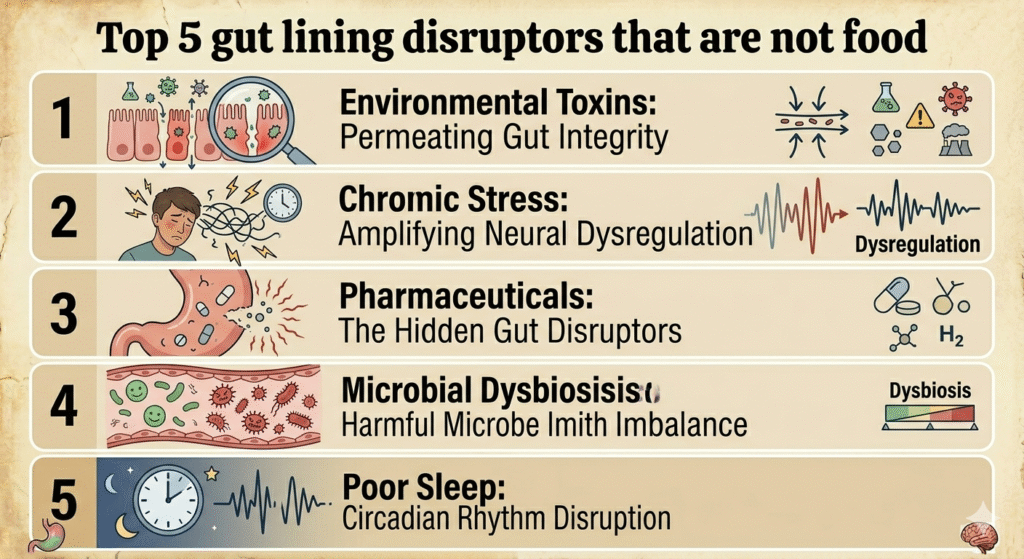
The widespread myth suggests that only diet disrupts the gut lining, causing IBS and leaky gut. This belief is misguided. The truth is, dietary factors are just the tip of the iceberg. Non-food factors can decimate the gut lining just as insidiously, leading to conditions like IBS and IBD that are poorly understood and often mismanaged. Enter systemic neurochemical and environmental influences, often unnamed culprits in the realm of gastrointestinal havoc.
Environmental Toxins: Permeating Gut Integrity
Industrial chemicals permeate our environment, and triclosan stands as a primary offender. Originally lauded for its antimicrobial properties, it infiltrates human tissue with insidious precision, altering the gut microbiome and compromising intestinal barriers. Through mechanisms like endothelial activation, triclosan disrupts the protective tight junctions between gut epithelial cells. This change is not merely superficial. It correlates with a heightened intestinal permeability, a recognized precursor to leaky gut syndrome. Furthermore, this assault on epithelial integrity triggers immune dysregulation, pivotal in the manifestation of IBS and IBD. It reframes the paradigm, moving beyond diet to include the toxic miasma of our surroundings in your understanding of gut health.
Chronic Stress: Amplifying Neural Dysregulation
Chronic stress doesn’t just “affect” the gut lining; it dismantles it systematically through the hypothalamic-pituitary-adrenal (HPA) axis. The HPA axis, a complex network, floods the system with cortisol, a stress hormone that compromises gut barrier function by upregulating zonulin. Zonulin modulates tight junction proteins, increasing intestinal permeability. This process triggers a cascade of inflammatory cytokines, perpetuating the inflammatory cycle linked to IBS and IBD. Even the vagus nerve, an integral part of the gut-brain axis, malfunctions under chronic stress, further dysregulating gut motility and exacerbating symptoms. This is a statement of fact: chronic stress distorts the fine balance, paving the way for gut-lining compromise beyond dietary triggers.
Pharmaceuticals: The Hidden Gut Disruptors
Common medications, often perceived as benign, wreak havoc on the gut lining. Nonsteroidal anti-inflammatory drugs (NSAIDs) such as ibuprofen impair mucosal defense systems directly, altering prostaglandin synthesis necessary for mucus production and epithelial repair. The result? Micro-erosions and ulcers that contribute to intestinal permeability. Proton pump inhibitors (PPIs), frequently prescribed for acid reflux, interfere with gastric pH balance, affecting beneficial gut microbiota populations. These drugs instigate low-grade inflammation, compromising gut integrity long-term. They serve as silent accomplices in undermining gut health, revealing the often-overlooked pharmacological assault on intestinal defenses.
The gut lining does not stand alone as a passive barrier. Non-food lifestyle and environmental factors engage vigorously in its disruption. Clinical truth demands: examine beyond the plate.
Leave a Reply