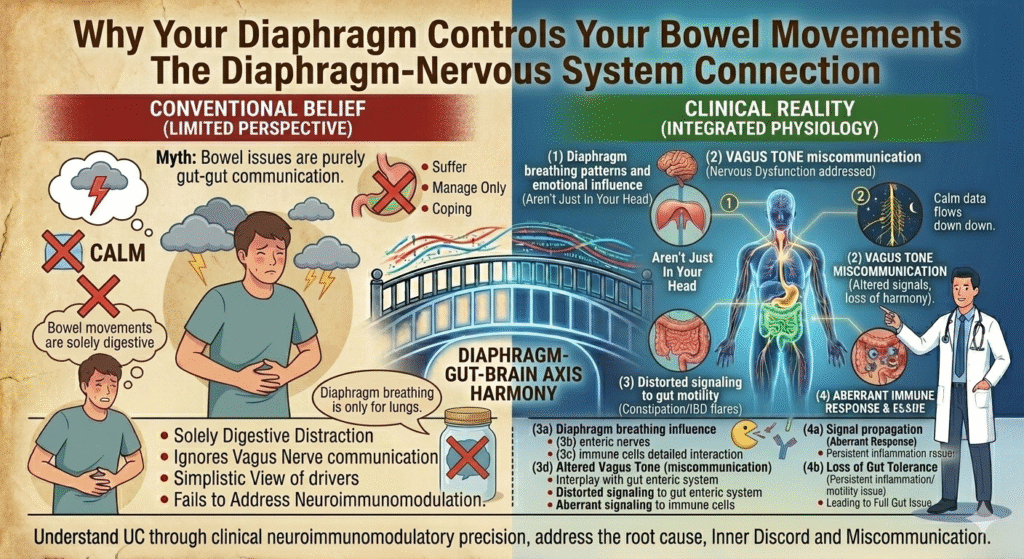
Think your diaphragm’s sole purpose is to help you breathe? That’s a myth. It does far more than you think, particularly when it comes to your bowel movements. Chronic constipation and incomplete evacuation could very well be tied to your diaphragm’s function or, more accurately, its dysfunction. Let’s bring the discussion out of the vague and into the truly anatomical, where your gut deserves serious clinical consideration. The diaphragm isn’t just a breath facilitator; it’s a powerhouse that impacts your digestive processes critically. If you’re constipated, your diaphragm could be the hidden culprit. Here’s how.
Your Gut’s Forgotten Ally: The Diaphragm and the Vagus Nerve
Ignore the oversimplified explanations that circulate popular health circles. Your diaphragm and vagus nerve interplay are far more sophisticated and crucial for gut function than the common wellness discourse likes to admit. Beyond respiration, your diaphragm directly influences the vagus nerve a linchpin in the gut-brain axis. The vagus nerve, through the parasympathetic pathway, tunes your enteric nervous system. It’s akin to a complex, two-way communication highway that regulates motility in your intestines. A malfunctioning diaphragm, therefore, disturbs this crucial pathway, leading to chronic constipation and a sense of incomplete evacuation. Respiratory-motion diaphragmatic contractions mechanically stimulate vagal afferents, impacting essential processes like peristalsis. Reframe how you see your breathing muscle; it’s a critical regulatory agent.
Chronic Constipation: The Diaphragm-Nervous System Connection
For too long, chronic constipation has been viewed through a lens that isolates the gut from the broader system of human physiology. This fragmentary view is outdated. You won’t break free from unresolved gut issues until you understand that the diaphragm affects nervous system regulation. Think of how your sympathetic and parasympathetic systems tug at each other, striving for balance, with the diaphragm often acting as an intermediary. When diaphragmatic tone is hindered be it from poor posture, diaphragmatic dysfunction, or nervous system dysregulation your body enters a perpetual fight-or-flight state. Here, sympathetic dominance takes precedence, inhibiting crucial digestive enzymes like acetylcholine. The result? Suboptimal GI transit time, sluggish motility, and chronic constipation. Your diaphragm’s health powerfully regulates this balance, rewiring your understanding of constipation’s physiological underpinnings.
Incomplete Evacuation: Emotional Patterns Aren’t Just In Your Head
Dismiss the assumption that emotional patterns don’t correlate with your GI tract. Clinical mechanisms support this link through the lens of polyvagal theory. Emotional stress skews the balance within the autonomic nervous system, triggering incomplete evacuation. Enter the diaphragm: your biological switch. The integrated effect of diaphragmatic engagement is profound activating the calming parasympathetic response via the vagus nerve, which modulates emotional hotspots within the neural landscape of the gut-brain axis. Deep, diaphragmatic breathing is a literal vagal nerve massage, recalibrating both emotional and physiological states. Persistent states of sympathetic overdrive leave your bowel movements incomplete, demonstrating how emotional dysregulation is manifested clinically. You can’t ignore the neural pathways underlying these symptoms; your diaphragm is integrally related to both mood and movement.
Chasing quick fixes for your gut issues without considering the diaphragm is futile. Your bowel movements reflect a deeper dialogue within your nervous system, moderated predominantly by a muscle no one told you to pay attention to. Constipation and incomplete evacuation are symptoms, nay, signals that your diaphragm demands focus. Recognize the clout of your breath and its enmeshment with digestive health. This isn’t a wellness platitude; it’s clinical fact. The diaphragm indeed controls your bowel movements.