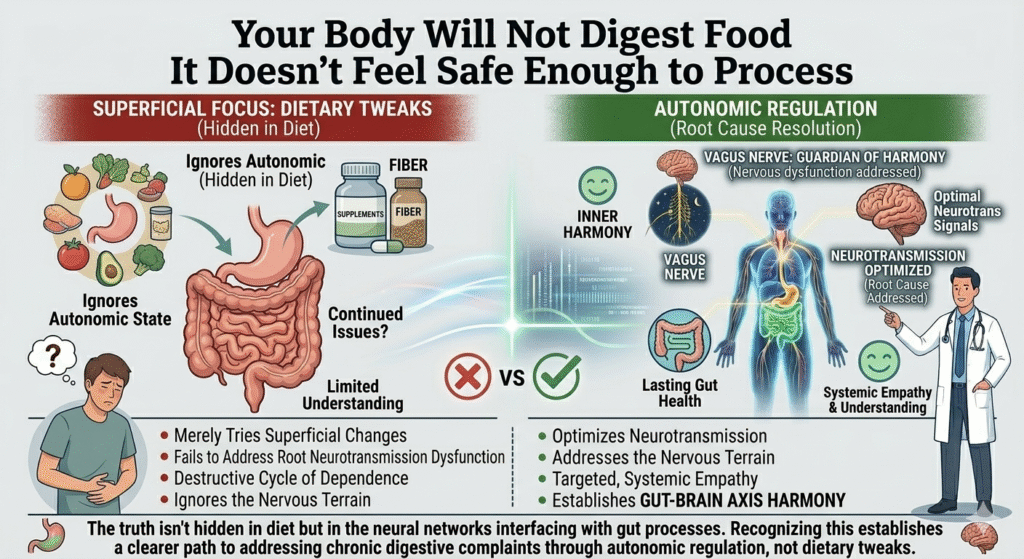
Here’s a myth: if you eat healthy, you’ll digest perfectly. Patients are often told that their diets are the sole factor in gut health, as if the gut operates in isolation. This fallacy ignores a critical truth: your body requires more than nutrients to digest food effectively it demands a sense of safety. The gut doesn’t live in an organ-shaped bubble; it’s an integral part of a complex network dominated by the gut-brain axis and the enteric nervous system. Feel unsafe? Your digestion grinds to a halt.
Autonomic Responses: More Than Fight or Flight
When you feel chronically unsafe, digestion is compromised. The autonomic nervous system prioritizes survival over digestion, predominantly through vagus nerve activity. This system, not fully embraced by traditional models, adjusts your physiological state to your perception of threat. It shifts blood flow from non-essential functions like digestion to muscles required for quick action. The vagus nerve, acting as a communication superhighway, does more than rest and digest: it signals safety and promotes balance. Dysfunction here disrupts this harmony and delays gastric emptying by reducing acetylcholine release, meaning food languishes in the stomach and gut irritability increases.
An idle vagus nerve triggers your enteric nervous system into chaos. Aberrant signals create sensations of fullness, bloating, or even pain without clinical cause. This isn’t a quick fix; it’s a matter of neural circuitry. Simplistic interpretations fail to address these depth mechanics. Patients with gut symptoms should question autonomic targets for effective digestive function, reframing the misguided assessment of symptoms as purely gastrointestinal in origin.
Polyvagal Theory: Reassessing Your Nervous System’s Role
The vagus nerve is not merely a cranial nerve; it’s the linchpin of the polyvagal theory, which describes the hierarchical manner of the autonomic responses. The theory emphasizes the significance of vagal tone akin to a muscle needing the right tension for optimal function. Poor vagal tone leads to a problematic gut-brain axis, overshadowing diet modifications. Elevated stress hormones like cortisol further alter gut flora. This hormone acts via the hypothalamic-pituitary-adrenal (HPA) axis a documented source of gut permeability that invites unwanted pathogens. Optimizing this complex nerve signaling goes beyond conventional treatment approaches.
The polyvagal theory reframes our understanding by linking mental states to physical symptoms, challenging antiquated models that separate body from mind. It illustrates why those with chronic stress or trauma often face unexplained digestive issues. The short-sighted healthcare practices often overlook regulating vagus nerve functions to treat the root circuitry of these disorders.
Gut Brain Axis: The Bidirectional Highway
The gut-brain axis is not a whimsical concept; it’s a sophisticated communication network where neurotransmitters like serotonin play vital roles. Over 90% of serotonin resides in the gut, influencing both mood and digestion. Disruption leads to plummeting gut motility and erratic intestinal function. This is less dietary and more autonomic. Neurotransmitter balance is contingent upon vagal nerve integrity and gut microbiota balance, with dysregulation leading to a cascade of digestive maladies. Consider irritable bowel syndrome (IBS), often mislabeled as a purely gastrointestinal problem when it’s intricately tied to neural dysfunction.
Revolutionizing the approach requires moving beyond the narrow view that assesses symptoms in isolation. Bacterial populations, vagal tone, and neurotransmitter production are inextricably linked, forging pathways for novel interventions that address root neurophysiological discrepancies over situational diet changes.
Without robust nerve signaling and a regulated autonomic state, digestion will not proceed efficiently. The truth isn’t hidden in diet but in the neural networks interfacing with gut processes. Recognizing this establishes a clearer path to addressing chronic digestive complaints through autonomic regulation, not dietary tweaks.
META DESCRIPTION:
Medical model fallacy: digestion needs more than food; it needs safety. Unlock the gut-nervous system connection to truly understand gut health.