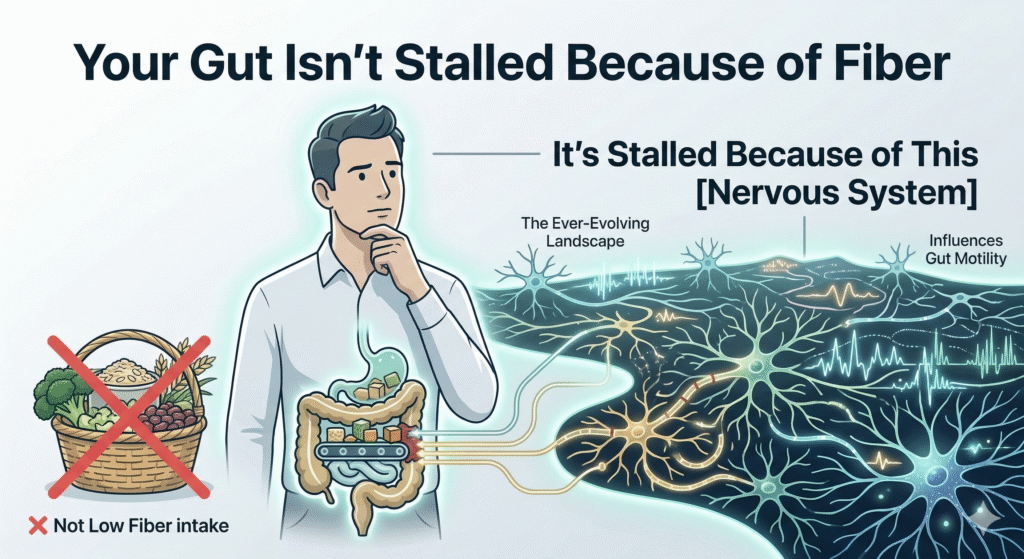
Forget everything you’ve been told about fiber and constipation. The notion that fiber alone is the savior for chronic constipation is a myth. The truth is that fiber won’t fix what your nervous system has disrupted. Chronic constipation stems more from nervous system dysregulation than a lack of roughage. If your gut is stalled, it’s time to look beyond fiber and uncover deeper physiological impediments. The key lies in understanding the intricate dialogue between your gut and your brain.
The Vagus Nerve: The Real Conductor of Gut Motility
The vagus nerve is the unsung hero or villain of gut motility. This nerve, crucial to the parasympathetic nervous system, orchestrates the essential communication between your brain and digestive system. It’s the primary conduit of the gut-brain axis, facilitating a bidirectional flow vital for bowel regularity. Dysregulation of this nerve leads to problems that not even the most fiber-rich diet could remedy. When vagal tone is impaired, the efficiency of the migrating motor complex suffers. This key mechanism is what propels digested material through the intestines during fasting states. When disrupted, incomplete evacuation is a frequent consequence. Chronic constipation often finds its roots here, tangled within a web of neural pathways that demand more clinical attention than dietary adjustments.
When Stress Meets the Enteric Nervous System
The enteric nervous system, your gut’s own ‘second brain,’ should not be ignored. This extensive network of neurons governs every phase of digestion independently. However, its functionality is heavily influenced by the emotional states registered in the cerebral cortex. Stress, particularly chronic stress, wreaks havoc through the hypothalamic-pituitary-adrenal axis, sending a cascade of glucocorticoids that persistently dampen enteric neuronal activity. This interference can sluggishly throttle gut motility, exacerbating symptoms of chronic constipation. It’s not merely about inconsistent bowel habits but about a system in distress, regulated by the unpredictable release of cortisol. It’s time to rethink the extent to which your nervous system impacts your daily stool consistency.
Polyvagal Theory: Bridging Emotions and Physiological Responses
Polyvagal theory elucidates the interaction between emotional states and the autonomic nervous system. It highlights the vagus nerve’s dual pathways the ventral and dorsal which mediate stress responses. In chronic constipation, these pathways can significantly alter gut functionality. The dorsal vagal complex is particularly notorious for shutting down gut activity under perceived threats. It’s a protective, albeit maladaptive, response that stalls digestion and leads to incomplete evacuation. Polyvagal theory teaches us that resolving constipation might not lie in dietary changes but in restoring balanced autonomic regulation. Recognizing emotional patterns could be the missing link in understanding gut health beyond mere diet.
Your gut isn’t simply a victim of low fiber intake. It’s a complex system influenced by the ever-evolving landscape of your nervous system. Decoding chronic constipation requires diving into the neurological web that defines gut-brain interactions. Reclaiming regular bowel functions means addressing the intricate neural and emotional factors at play, rooted in the overlooked highways of nervous system communication.
Meta Description:
Unveil the myth about fiber’s role in chronic constipation. Discover how nervous system disruptions are the real stallers of your gut’s progress.