Here lies a myth: Irritable Bowel Syndrome is purely a gut issue. It’s time to discard this antiquated notion. IBS is not solely about dietary triggers or bowel habits it’s about the Vata dosha. In Ayurveda, Vata governs movement, including the subtle nerve currents and neurotransmitters that orchestrate gut health. When Vata derails, it is not just digestion that suffers. Anxiety finds a home in the very lining of your intestines. The unholy trinity of Vata dosha, IBS, and anxiety prove that your gut symptoms are deeply tethered to your nervous system.
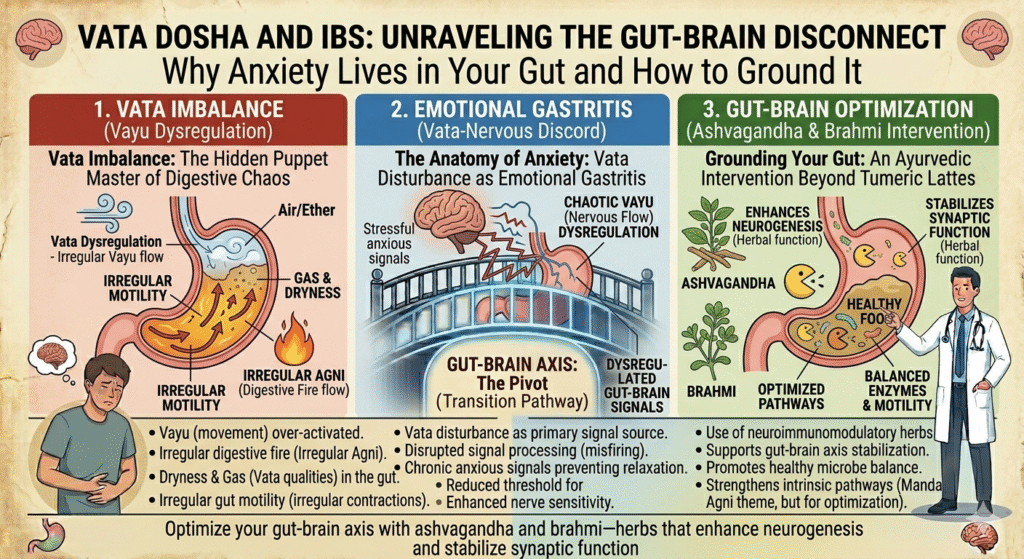
Vata Imbalance: The Hidden Puppet Master of Digestive Chaos
Every case of Irritable Bowel Syndrome is a textbook on Vata imbalance. The enteric nervous system, often dubbed the “second brain,” is disrupted by the hypermobility of Vata. When Vata is excessive, expect erratic digestive patterns and bloating a direct byproduct of neurotransmitter imbalance. It’s not in your head; it’s in your gut’s neurological circuitry. This mirrors disruptions in the diurnal cycle of bowel movements regulated by the vagus nerve. The vagus, your parasympathetic control center, modulates the Apana Vata, governing bowel evacuation. Vata runs riot, and so does your gut. And no, probiotics will not quiet this storm.
Polyvagal theory offers insight: when the vagus nerve falters, your gut shifts from digestion to defense. Serotonin, the neurotransmitter, exits digestion to amplify anxiety. Your gut cries chaos, confusing traditional medicine. The real casualty is your ability to differentiate normal fatigue from Vata-driven nervous energy. Every IBS flare is a systemic alert that transcends the digestive tract, signaling a neural misalignment that modern medicine overlooks.
The Anatomy of Anxiety: Vata Disturbance as Emotional Gastritis
Your gut is not just digesting food; it processes emotions. Vata-dominated individuals are predisposed to nervous system sensitivity that marries anxious thought patterns with visceral sensations. Heightened excitatory pathways and dysregulated serotonin levels lead to relentless gut unease. When Vata is unstable, it not only ignites digestive problems but also magnifies anxiety. The culprit is the dysregulated hypothalamic-pituitary-adrenal (HPA) axis. Stress hormones spike, usurping the vagus nerve’s calming influence.
Brain-gut interaction isn’t mysticism it’s the essence of polyvagal mechanics. Your enteric nervous system reacts to stress, rerouting blood away from the intestines, activating temporary gastrointestinal paralysis. In layman’s terms, anxiety tightens your gut’s brakes. Vata perpetuates this by inducing dry, irregular digestive activity. The intricate dance between your imbalanced Vata and disrupted nervous system produces perpetual gut-induced anxiety, leaving you on a hamster wheel of symptoms.
Rethink anxiety as a neurologic consequence of imbalanced Vata. Your IBS is neither mysterious nor incurable; it’s a reflection of systemic neurological dysregulation.
Grounding Your Gut: An Ayurvedic Intervention Beyond Tumeric Lattes
If Vata dosha stirs the pot of digestive stagnation and anxiety, grounding is the remedy to stabilize these turbulent waters. Traditional Ayurveda in India understands a thing or two about stabilizing Apana Vata. The goal isn’t just to comfort the gut but to recalibrate the nervous dialog between gut and brain. Forget superficial remedies; think of Ayurvedic IBS treatment as neural modulation. Reduction of Vata is not just dietary; it’s somatic. Deep diaphragmatic breathing isn’t just relaxation; it’s an intentional vagal stimulus suppressing Vata’s havoc.
Optimize your gut-brain axis with ashvagandha and brahmi herbs that enhance neurogenesis and stabilize synaptic function. By targeting the gut’s vagal tone, you dismantle the cyclical grip of anxiety. Omega-3 fatty acids improve neural plasticity, altering serotonin pathways otherwise hijacked by dysregulated Vata. The process isn’t instantaneous; neurological recalibration is methodical and demands clinical precision. The intervention supports a reduction in gastrointestinal hypermotility, reminding you that Earth’s grounding substances are more powerful than pharmaceuticals ignored by Western diets.
Rest assured, grounding strategies extend beyond transient symptom relief. By addressing the polyvagal-encoded nervous imbalance, they illuminate the path from gut disorder to resilience.
Here is the truth: IBS isn’t a misfit symptom complex. It is a physiological exhibition of an imbalanced Vata dosha. Now, consider the scientific prowess of Ayurvedic practices rooted not in myth but in biomechanical enlightenment. Ground your gut. Restore neurological balance. Reclaim command over your Vata.
**Meta Description:**
IBS and anxiety are intertwined with Vata dosha chaos. Discover Ayurvedic strategies for grounding and neural restoration. Clinical steps, not wellness fluff.
Leave a Reply