Gut dysbiosis is not the wellness buzzword you’ve been led to believe. It’s not a wellness trend. It’s a clinical reality. Misunderstood and often ignored, gut dysbiosis symptoms in India manifest in a multitude of chronic issues. Traditional medicine mislabels them as disconnected diseases, sidelining the gut microbiome imbalance that drives these conditions. We’re not talking probiotics as a panacea; we’re talking about a foundation of systemic health shaking under the weight of microbial chaos.
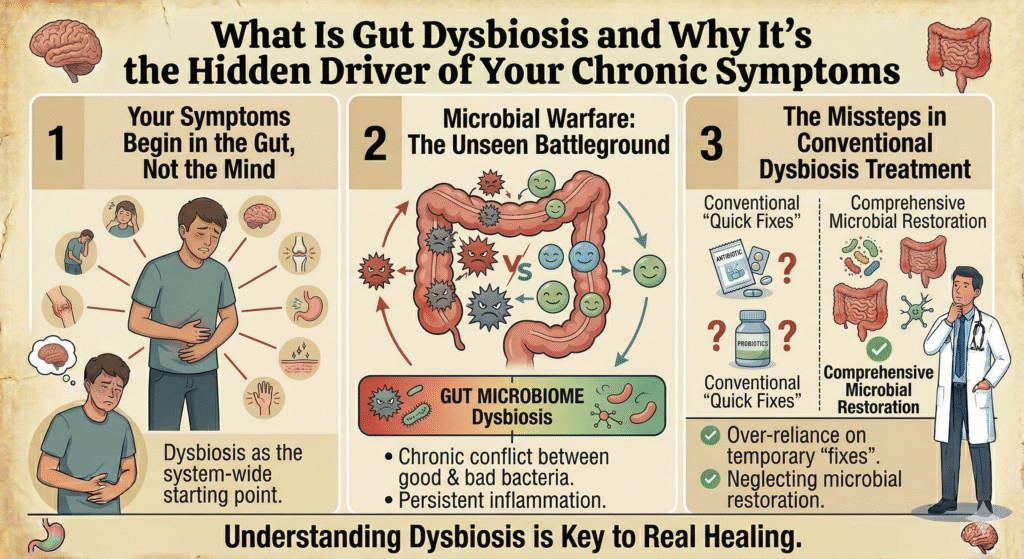
Your Symptoms Begin in the Gut, Not the Mind
Emotional disturbances are not mental before they are physical. The vagus nerve plays a critical role in linking gut dysbiosis to nervous system dysregulation. This bidirectional powerhouse creates a feedback loop between your gastrointestinal tract and your mental equilibrium. Dysbiosis does not just sit quietly within the gut; it disrupts this connection, fueling symptoms previously labeled as psychological. Polyvagal theory explains how vagal tone can modulate your stress response via gut signals. Bloating and fatigue aren’t separate entities; they’re the smoke of the dysbiotic fire raging in your gut. The alteration of short-chain fatty acids affects not just digestion but neural transmission affecting your mood and focus. The next time you overanalyse your stress, consider the microbial imbalances. They’re the real architects of your dissonance.
Microbial Warfare: The Unseen Battleground
Gut bacteria are not passive residents; they are biochemical factories and warriors. Dysbiosis and bloating are the direct results of pathogenic overgrowth and microbial warfare. The gut microbiome imbalance influences digestion directly via nutrient malabsorption. It’s a domino effect from compromised fermentation processes at the microbial level. Enzymes like tryptophan decarboxylase present a biochemical battleground, altering neurotransmitter synthesis. It’s no stretch to say that in cases of microbiome and IBS, clinical treatment should begin with microbial realignment. This is not alternative medicine; it’s diagnostics waiting to become mainstream. Those extra inches around your waistline? They’re an artifact of an ecosystem at war, not just calories consumed.
The Missteps in Conventional Dysbiosis Treatment
The go-to diagnostics fail because they overlook the basics of microbial diversity. Conventional medicine often sees the gut dysbiosis treatment as a checklist of antimicrobial protocols rather than a system overhaul. This limited vision compromises long-term treatment efficacy. Gut bacteria orchestrate your metabolic and immune responses; their imbalance disrupts this harmony, spiraling into chronic inflammation. The enzyme urease, part of the heliobacter pylori pathway, is just one aggressor among many creating havoc. Engineers of your body’s internal landscape, these microbes dictate systemic function and dysfunction alike. Focusing on symptom suppression while overlooking microbial balance perpetuates incorrect diagnoses and poor outcomes. A precise microbial audit is as crucial as your next lab test.
Your symptoms are not a standalone saga but chapters of a larger narrative called gut dysbiosis. They do not lie in isolation; they are intricately woven into the physiological fabric of your gut health. The next time you discuss your symptoms, remember to name this forgotten driver: dysbiosis. It’s not an alternative theory; it’s a clinical cornerstone ignored at the peril of genuine recovery.
Leave a Reply