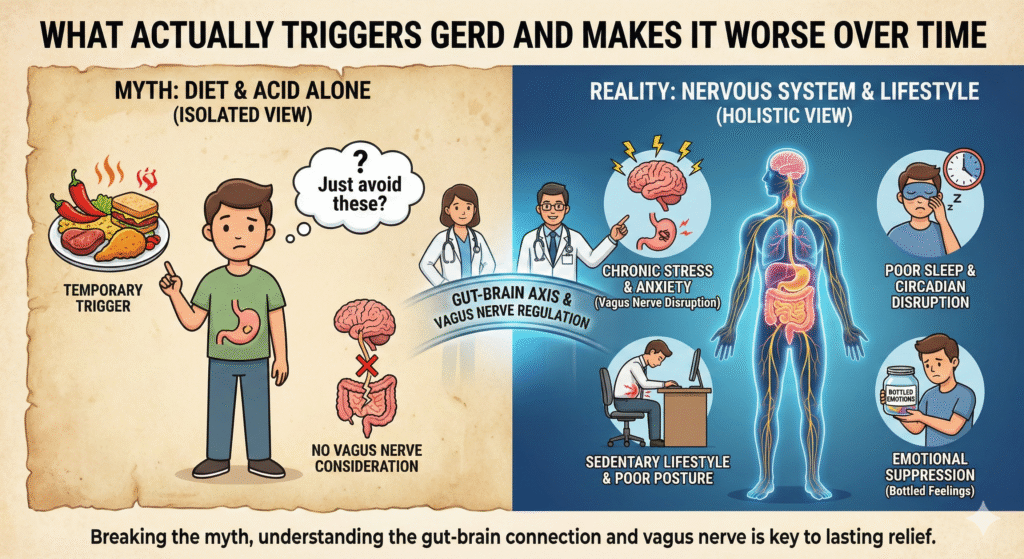
Many people believe that gut health is only about digestion and doesn’t significantly affect other body systems. However, this is a myth. In reality, your gut health plays a vital role in influencing your nervous system, even to the point of impacting your mental and emotional well-being. The intricate relationship between the gut and the brain has become a hot topic, and for a good reason; it involves the complex interplay of neuroscience, psychomatics, and the vagus nerve, demonstrating how our emotions and gut issues are interconnected.
Recent studies reveal that your gut health is far more than just a digestive concern. The gut is home to trillions of bacteria, forming a complex community known as the microbiota. This microbiota is fundamental to forming the gut-brain axis. The gut-brain axis is a communication network that links the emotional and cognitive centers of the brain with peripheral intestinal functions through neural, hormonal, and immune pathways. At the center of this is the vagus nerve, a critical component of the parasympathetic nervous system.
The vagus nerve acts as a major connector between the gut and the brain. It plays a crucial role in conveying nutritional and emotional information between these two central systems. When the gut is in distress, whether due to inflammation, imbalance, or poor dietary choices, the vagus nerve sends these distress signals to the brain. This communication can manifest as stress, anxiety, or other emotional imbalances. The power of this interaction reflects psychomatics – the intersection of mind-body connection and functional physiology.
Gut issues can often correlate with irregular responses in the nervous system. For example, when someone experiences irritable bowel syndrome (IBS), it doesn’t just affect their digestion. The symptoms also extend to increased levels of anxiety and depression. This relationship between the gut and psychological discomfort is likely rooted in miscommunication along the vagus nerve, thwarting the body’s natural equilibrium. It’s evident that both systems mirror one another, suggesting that addressing one can lead to improvements in the other.
Interestingly, certain neurotransmitters such as serotonin commonly associated with mood stabilization are also primarily produced in the gut. An imbalance here can directly translate to emotional and mental health issues. The gut’s capacity to manufacture neurotransmitters further underscores the importance of maintaining a balanced gut microbiome. Balancing these neurotransmitters with a healthy gut leads to better mood regulation, reduced chronic stress, and better mental clarity.
The effects of gut health on emotions reach beyond the realm of traditional physiology and into the realm of emotional patterns. Emotional patterns are the recurrent emotional responses and feelings that individuals experience in their daily lives. These patterns are often deeply entrenched, stemming from past experiences or chronic conditions. When the gut is imbalanced, it can exaggerate negative emotional patterns, altering one’s ability to process emotions healthily or cope with stress.
Tackling gut issues requires a multifaceted approach. Experts often recommend a combination of diet adjustment, stress management techniques, and sometimes supplementation. Incorporating a diet rich in probiotics and prebiotics can enhance gut health as they nurture the beneficial bacteria in the microbiome. Probiotics are “good” bacteria that help rebalance the gut microbiota, while prebiotics serve as food for these bacteria.
Moreover, great attention should be paid to managing stress since it directly impacts the gut-brain axis. Techniques like meditation, deep breathing exercises, yoga, and mindfulness have been shown to bolster the health of the vagus nerve. These practices improve vagal tone, which enhances the resilience of the nervous system, enabling it to handle stress better and maintain a healthy balance between the gut and brain.
One cannot overlook the role of emotions and cognitive strategies in gut health. Cognitive Behavioral Therapy (CBT) and other forms of emotional regulation techniques can be powerful tools to mitigate gut discomfort stemming from psychological predispositions. Modulating emotional patterns and developing resilience through therapeutic interventions can lead to significant improvements in both digestive symptoms and mental health.
Your journey toward optimal health should thus recognize the fundamental connection between gut health and the nervous system. By understanding this interconnectedness, guided by the principles of neuroscience and psychomatics, it becomes possible to adopt practices that nurture both gut and mental well-being. Seek guidance from a gut health and nervous system coach who can provide personalized advice and support as you navigate these complex waters.
To conclude, breaking the myth that gut health is only a digestive issue opens the door to understanding the comprehensive role it plays in overall health. The relationship between the gut and the brain encapsulates the significance of the vagus nerve and emotional patterns in gelling the bodily and mental function. Aligning the health of your gut with that of your nervous system could be your key to a balanced, calmer, and healthier life.