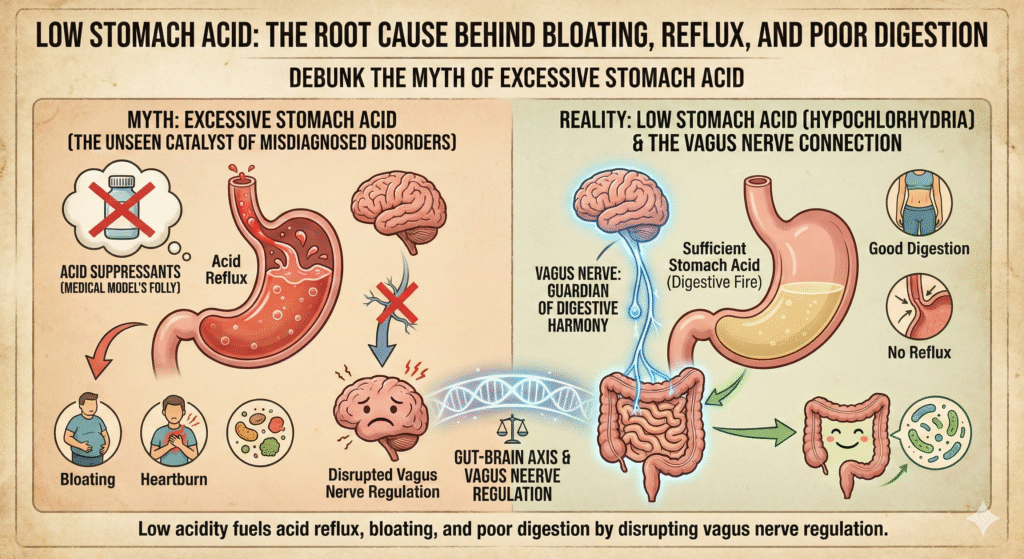
The myth of excessive stomach acid as the culprit for acid reflux and bloating has misled patients for years. This narrative is not just inaccurate; it’s detrimental. In reality, low stomach acid is frequently the silent trigger, fostering an environment where discomfort and digestive disorders thrive. Understanding this fundamental truth disrupts decades of misguided treatments and reshapes how we approach gut health.
Low Stomach Acid: The Unseen Catalyst of Misdiagnosed Disorders
The human body demands a delicate balance of acidity for proper digestion, yet when stomach acid is low, enzymes such as pepsin remain inactive. Pepsin is crucial for protein breakdown, and without it, proteins ferment rather than digest, leading to bloating and gas. Low acidity permits undigested particles to linger, inciting a histamine response that mimics typical acid reflux symptoms. The vagus nerve, a pivotal element in the gut-brain axis, regulates stomach acid secretion. Dysregulation of this nerve—whether through chronic stress or nervous system imbalance—interrupts stomach acid production, instigating a cascade of digestive dysfunctions. The irony lies in millions turning to antacids and PPIs for relief, inadvertently suppressing remaining beneficial acids and exacerbating underlying issues. This illusion of palliative care demonstrates how medical protocols have historically provided flesh wounds with band-aids.
The Vagus Nerve: Guardian of Digestive Harmony
The vagus nerve is not just a regulatory conduit of the parasympathetic nervous system, it is the command hub in the enteric nervous system that maintains digestive equilibrium. When compromised, it distorts the interplay between neurotransmitters and digestive hormones. Gut-brain communication falters, leading to decreased gastric acid production. Without adequate acidity, the initiation of digestion is incomplete, leaving carbohydrates to ferment in the gut and produce excess gas. This fermentation process is erroneously blamed on bacterial overgrowth, when in fact it is a fundamental weakness of the digestive catalyst—hydrochloric acid. Emotions impact vagal tone, altering gastric motility and acid secretion. This is not mere supposition; polyvagal theory details how autonomic flexibility influences visceral responses, including digestion. A nervous system trapped in sympathetic dominance perpetually mismanages intestinal function, and the cycle of antacids only compounds this dysregulation. Clinicians must face this reality: the pathway to resolution is not through suppression, but restoration of the vagus nerve’s capabilities.
Acid Suppression: A Medical Model’s Folly
Long-term reliance on proton pump inhibitors (PPIs) points to a glaring oversight in conventional treatment methodologies. These medications suppress gastric acid, assuming excess as the chief issue. However, minimal stomach acidity leads to poor nutrient absorption, particularly vitamin B12, magnesium, and iron. The enzyme H+/K+ ATPase, responsible for proton exchange and acid release, becomes dormant with chronic PPI use. This disruption of gastric homeostasis can induce rebound hypersecretion, tricking patients into a perpetual cycle of increasing dosages for diminishing relief. Meanwhile, the neurological oversight—the input of digestive information via mechanoreceptors to the central nervous system—is dismissed. The polyvagal pathway provides insight into how stress-induced vagal deterrents impact gut efficiency. Chronic use of acid suppressants can further compromise this intricate biological dialogue, underscoring the need to reassess and recalibrate based on physiological, not pharmacological, truths.
Clinical understanding is pivotal: Reflux, bloating, and poor digestion are not mere inconveniences; they are indicators of a deeper pathophysiological misalignment. True resolution demands an understanding of the nervous system’s integral role in digestion, not a further descent into pharmacological quick fixes.
**Meta Description:**
Debunk the myth of excessive stomach acid. Discover how low acidity fuels acid reflux, bloating, and poor digestion by disrupting vagus nerve regulation.