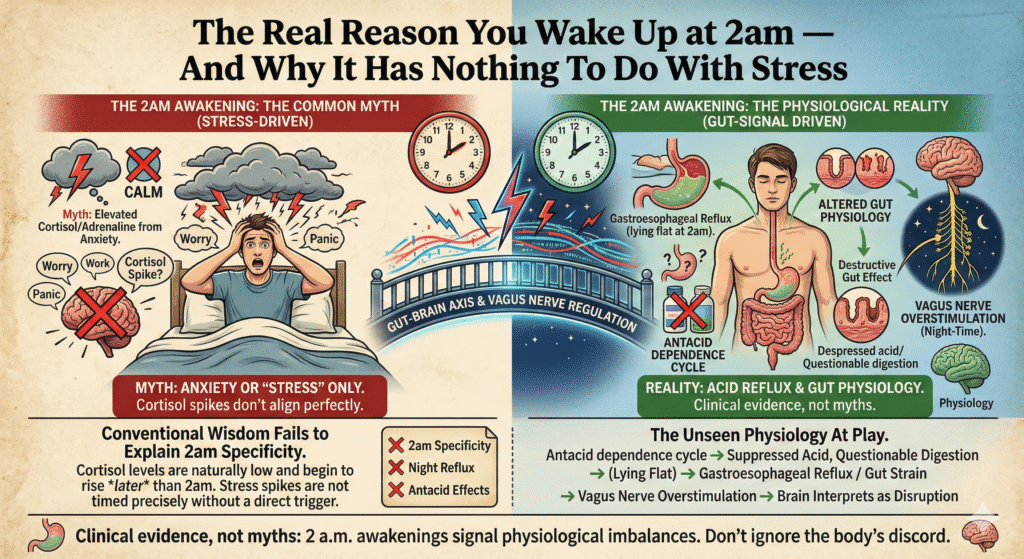
Many believe waking up at 2 a.m. is a simple byproduct of stress. It’s a myth. The reality is far more clinically complex. Stress is merely the surface of a deeper issue that resides in your gut specifically, within acidity and related conditions like acid reflux. The real perpetrator is your insidious cycle of excessive antacid use and the damaging truth about PPIs (proton pump inhibitors).
Acid Reflux: The Real Culprit Behind Nocturnal Wakefulness
Acid reflux isn’t just a minor inconvenience. It’s a powerful disruptor of sleep due to its direct impact on the vagus nerve, a critical component of the parasympathetic nervous system. Recurrent reflux episodes stimulate this nerve, causing nighttime awakenings. Not to mention, the role of enteric neurons is pivotal in this process, given their ability to signal the brain via the gut-brain axis, triggering sleep disturbances. Chronic use of antacids can exacerbate these conditions by impairing gastric flora and upsetting the delicate gastrointestinal function potentially leading to increased acid production once their effect wanes. Despite popular beliefs, it’s not merely the stress that awakens you, but rather, an internal alarm initiated by an imbalanced system, deeply linked to the physiology dictated by your gut.
The Downside of Over-Reliance on Antacids and PPIs
Long-term use of antacids and PPIs is not a harmless choice; it’s a detrimental habit that instigates broader systemic imbalances. PPIs, for instance, are known to inhibit gastric H+/K+ ATPase enzymes, reducing stomach acid and compromising digestion. This suppression might seemingly alleviate your symptoms momentarily but encourages intestinal dysbiosis and a cascade of gastric issues that can elevate nocturnal alertness. The suppression of acid also has cascading effects on nutrient absorption, affecting calcium, magnesium, and vitamin B12, which further alters the chemical landscape of the nervous system. Waking up at 2 a.m. is not about what stress puts you to bed, but what you ingested before bedtime and how it pharmacologically reprograms your physiology.
The Gut-Brain Axis and Your Nervous System’s Hidden Agenda
Understanding the gut-brain axis unearths why gastrointestinal symptoms manifest in eerily predictable nocturnal patterns. Polyvagal theory posits that the vagus nerve mediates between physiologic arousal and the rest phase potentially explaining why digestive upset translates to sleeplessness. The enteric nervous system, with its 500 million neurons, communicates with the central nervous system far beyond mere ‘stress’ pathways. Hormones like ghrelin and leptin, regulated by gut signals, influence metabolic states during sleep, while digestive acids disturb other autonomic functions. When your gut speaks, your nervous system listens and obeys. Thus, those 2 a.m. interruptions aren’t just rude awakenings; they’re neurophysiologic interrogations from an unbalanced gut looking for answers it hasn’t received.
Observe the clinical evidence, not myths: 2 a.m. awakenings signal physiological imbalances, not stress. Until we recognize the destructive cycle of antacid dependence and altered gut physiology, these awakenings will continue unchallenged, each a silent testimony to a body’s inner discord.
Meta Description: Awakened at 2am? It’s not stress but gut signals driven by acid reflux and antacids. Unravel the physiology ignored by conventional wisdom.