The myth that gut health is a standalone issue to be remedied by probiotics and dietary changes alone is deeply flawed. Gut health is not isolated from the rest of the body; it is intricately linked to the nervous system, emotions, and even cognition. The truth lies in the gut-brain axis, where the gut and nervous system operate in synchrony. Ignoring this connection means treating symptoms, not systems.
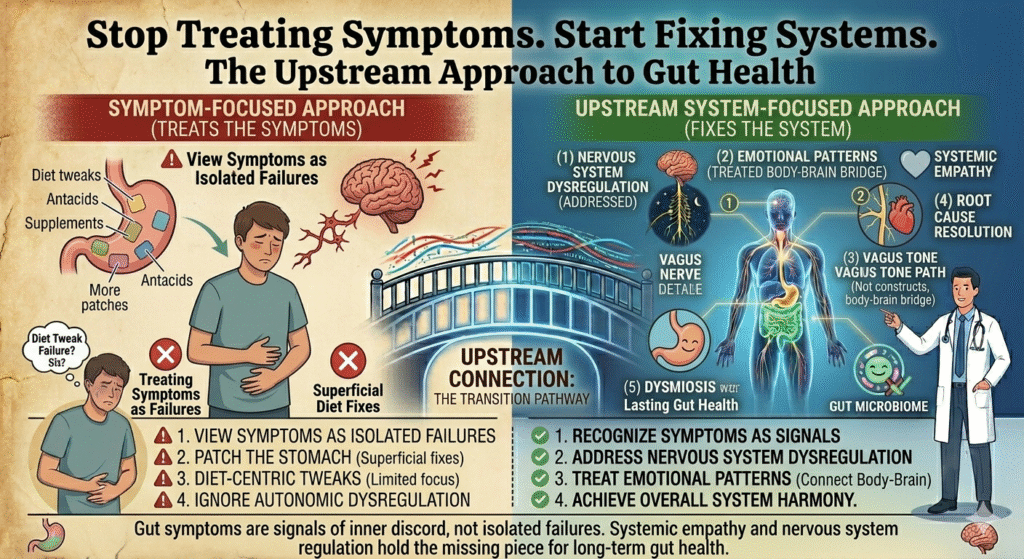
Gut Symptoms Are Signals, Not Isolated Failures.
Gastrointestinal disturbances are often seen in isolation. They aren’t. The gut symptoms you experience are complex biomarkers of a malfunctioning gut-brain axis. The enteric nervous system, an extensive web of neurons within your gastrointestinal tract, communicates directly with your brain through the vagus nerve. This is not a mere communication link; it is a bi-directional pathway significantly influenced by your mental and emotional states.
The vagus nerve, the longest cranial nerve, acts as a key mediator in this gut-brain interaction. Through afferent fibers, it sends sensory information from the gut to the brain. Meanwhile, efferent signals regulate gastrointestinal motility and secretion. If you treat only the symptoms without addressing this neural control, you miss the actual source of dysfunction. The true disease lies in the dysregulation of these pathways. This reframes your niggling gut issues as systemic, not local.
Nervous System Dysregulation Is the Real Culprit.
Tracing gut problems to nutritional missteps or microbial imbalances is failing to see the larger dysfunction. Dysregulation of the autonomic nervous system, and particularly the vagus nerve, creates a fertile ground for gastrointestinal disorders. Inadequate polyvagal function a concept grounded in polyvagal theory leads to hypersensitivity in the gut, contributing to conditions such as IBS or functional dyspepsia.
Ingested foods do not hold full responsibility. Nor do pathogenic bacteria. The imbalance in nervous system responsiveness affects your entire gastrointestinal tract, from altered peristalsis to variations in gastric secretion. Your ‘gut instinct’ is more literal than you think. When your vagus nerve functions at its peak, it harnesses regulatory neurotransmitters and peptides that stabilize your gut environment. The realignment of these signals alters your understanding of gut health fundamentally.
Emotional Patterns Are Not Mere Psychological Constructs.
Emotions are often dismissed as abstract. Yet, they create concrete physiological impacts on your gut health. When emotional stress alters your nervous system’s state, it disrupts the delicate balance of the gut-brain axis. This is not psychobabble; it’s neuroscience. Emotional states influence the release of corticotropin-releasing hormone, leading to increased gut permeability and altered gut microbiota.
Psychological stress activates the hypothalamic-pituitary-adrenal axis, sending cortisol levels soaring and ramping up the gut’s inflammatory responses. The gut microbiome reacts in kind, modulating its composition and metabolic capacity. Such alterations are magnified at the neurochemical level, affecting serotonin and dopamine transmission in the brain as mediated by the gut. Your digestive issues are more than digestive. They are a visceral response to your emotional landscape. This knowledge transforms the understanding of how deeply interconnected these processes are.
The idea that treating gut health is simply a matter of adjusting diet or taking probiotics is obsolete. The concept is myopic and ultimately ineffective. Acknowledging the complex interplay within the gut-brain axis, the function of the vagus nerve, and the neurochemical impact of emotions is not merely important it is essential. Gut symptoms are your body’s signals of a broader systemic issue; they are warning sirens in a much larger, intricate physiological opera. Treat the system, not the symptom. That’s the clinical truth.
Meta Description:
Understand gut issues in relation to the nervous system. Discover the gut-brain axis, vagus nerve, and emotional impact on gut health.