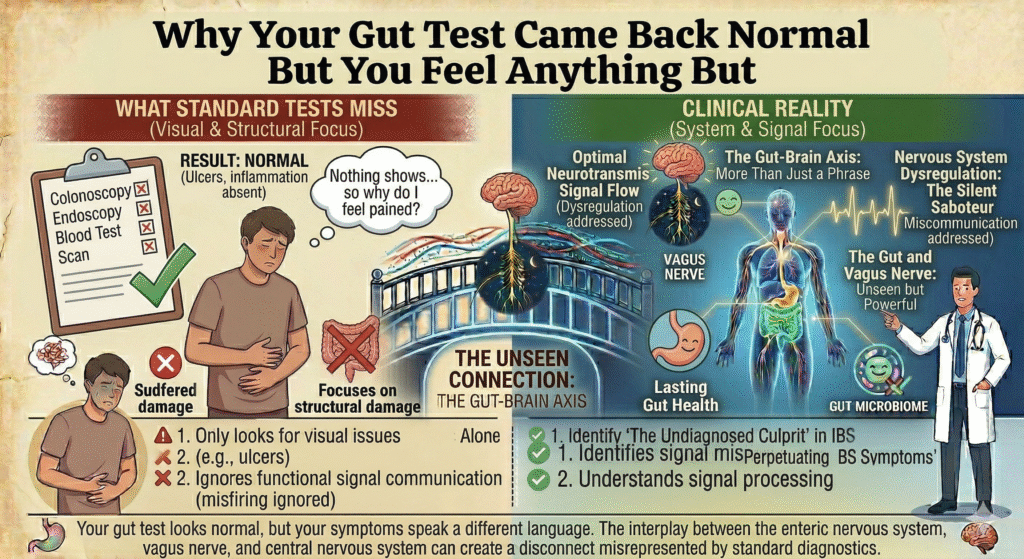
Contrary to popular belief, a normal gut test result doesn’t mean your digestive system is functioning optimally. The myth of equating test results with actual health is pervasive and damaging. This misunderstanding arises from the incomplete nature of standard diagnostics, which often fail to capture the dynamic interactions between the gut and the nervous system. The gut and nervous system operate through complex biochemical pathways that don’t show up in traditional tests. Your gut is more than just a digestive organ; it is a critical component of the gut-brain axis. So, if your test says ‘normal’ but you feel anything but, it’s not in your head—it’s in your intricate biological network.
The Gut and Vagus Nerve: Unseen but Powerful
The vagus nerve is the unsung hero in the saga of gut health. It’s the vital communication line that transmits signals between your gut and brain. Known as the tenth cranial nerve, the vagus nerve extends from the brainstem to the abdomen, innervating major organs. This nerve is your direct line of communication and plays a crucial role in parasympathetic regulation. However, conventional gut tests don’t evaluate the vagal tone or its impact on gut-brain communication. Dysregulation in the vagus nerve can result in symptoms that defy ‘normal’ test results. When vagal function falters, the enteric nervous system suffers, resulting in poor digestive function and even exacerbating anxiety levels. If your gut feels off, the vagus nerve might be the missing piece your tests couldn’t capture.
Nervous System Dysregulation: The Silent Saboteur
Gut health isn’t solely about the microbiome or what you eat. The central nervous system, including the autonomic branches, interacts closely with your gut. Nervous system dysregulation can originate from chronic stress, trauma, or even unknown internal chemistry. Traditional medicine often ignores how dysregulated neural pathways, like those influenced by the hypothalamic-pituitary-adrenal (HPA) axis, manifest in gut health issues. Consider the polyvagal theory, which explains how our bodily state influences gut function. High alert states reduce digestive efficiency; calm states promote it. If your gut feels wrong but all lab values are ‘normal,’ consider that it’s the nervous system manipulating your digestive processes covertly.
The Gut-Brain Axis: More Than Just a Phrase
The gut-brain axis is not just a buzzword; it’s a lifeline connecting your emotional, cognitive, and digestive health. The bi-directional communication between your gut and brain means that neurotransmitters like serotonin—produced largely in the gut—have systemic effects. The enzymes and neuropathways that facilitate this communication remain largely unexplored in conventional testing. Take, for instance, the monoamine oxidase (MAO) pathway, crucial for neurotransmitter breakdown and influential in mood disorders. It is well-documented that a disrupted gut microenvironment can impact these pathways, influencing both mood and gut health. Thus, when your gut feels off despite ‘okay’ tests, look at the axis that holds the real answers.
Your gut test looks normal, but your symptoms speak a different language. The interplay between the enteric nervous system, vagus nerve, and central nervous system can create a disconnect misrepresented by standard diagnostics. If how you feel contradicts your test results, it’s the physiological reality of a system out of balance, deserving more than mere statistical analysis.
Meta Description: Normal gut tests can be misleading. Discover the gut-brain connections influencing how you feel. Understand the hidden truth behind your symptoms.